


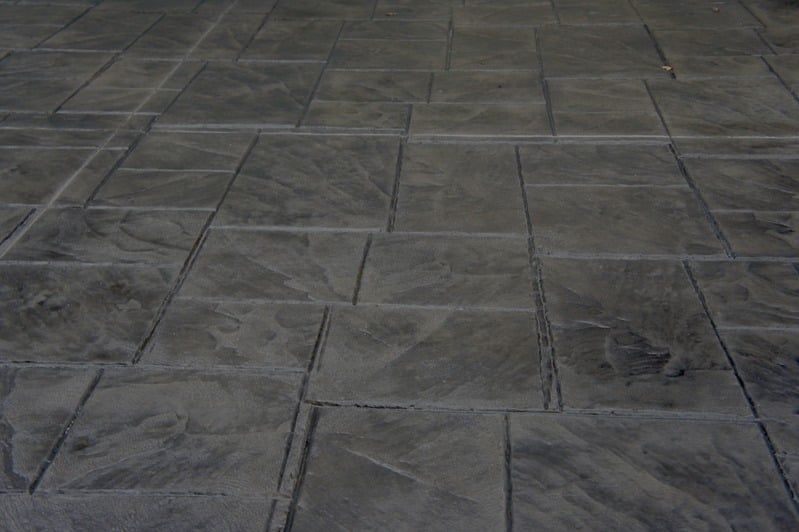
We install both, which means we have no particular stake in which you choose. Properly built, either will outlast the car parked on it. The decision comes down to four things: what you’ll pay, what happens when something goes wrong, what the winter does to it, and what you want to look at.
Cost
Concrete is usually cheaper per square foot for a plain broom finish. Interlock costs more because it’s more labour — every unit set by hand — and the base is typically deeper.
The gap closes fast once concrete gets decorative. Stamped or exposed aggregate lands in similar territory to mid-range pavers. If you’re comparing a basic broom slab to basic pavers, concrete wins on price. If you want texture and pattern, it’s closer than you’d think.
Repairability — the one that actually decides it
Interlock’s real advantage. A settled section lifts, the base gets fixed, the pavers go back. Done properly you can’t tell. Utility dig? Same. Stain on one paver? Replace that paver.
Concrete offers none of that. A crack is permanent. A patch never matches. A section replacement means cutting out a panel between control joints and living with a visible joint and a colour difference — new concrete never matches cured concrete.
If your street has had a utility opened up more than once, or your soil moves, weight this heavily.
Winter: plows and salt
This is where the Hamilton-specific answer differs from the generic one.
Plows. A plow blade on interlock catches lippage — any paver sitting slightly proud gets caught and pulled. On a properly laid field that’s rare, and on a poorly laid one it’s annual. Concrete has nothing to catch, so if your driveway gets machine-plowed every storm, that’s a mark for concrete.
Salt. The reverse. De-icing salt is hard on concrete: it drives freeze-thaw cycles and causes surface scaling, which is permanent and resurfacing-only. Pavers are manufactured dense and don’t scale the same way — salt can etch and fade the surface over many years, but it doesn’t flake them apart.
Heaving. Both move if the base is wrong. The difference is what happens next: a heaved interlock field is re-levelled; a heaved slab is replaced.
Maintenance
Interlock: polymeric sand needs topping up every several years, weeds and ants find any joint that wasn’t sealed properly, and sealing every few years keeps the colour up. Low effort, never zero.
Concrete: essentially nothing for years, then sealing on decorative finishes, then at some point a crack you live with. Lower ongoing effort, less recoverable when it goes.
Looks and resale
Interlock reads as a finished landscape feature — borders, pattern, colour blends, and it ties naturally into walkways and a front garden. Concrete reads clean and architectural; stamped and exposed aggregate add texture without joints.
On resale in this market, both present well when they’re in good condition and neither is a differentiator by itself. What moves a buyer is a surface that looks maintained. A tired interlock driveway can be re-levelled and re-sanded before listing for a fraction of what a tired concrete driveway costs to fix — which is a resale argument for interlock that rarely gets made.
How we'd actually decide
Choose interlock if you want it repairable, your soil moves, utilities get opened on your street, or you want the surface to read as landscape.
Choose concrete if you want the lowest cost per square foot for a plain finish, you prefer a seamless surface, or your driveway gets machine-plowed hard every winter.
Either way: base depth, compaction and drainage matter far more than the choice. A well-built concrete driveway beats a badly built interlock one every single time, and the reverse is just as true. Ask about the base before you ask about the surface.